Once upon a time, I stood at the full-wall kitchen window in my West Village office building and watched two planes crash into towers a mile downtown. I watched debris fall and gradually realized that it was not all pieces of plane and glass. I watched those towers pancake to the ground, the vision painfully surreal to process.
I walked the eighty blocks back to my apartment, tuned the radio to NPR, and slumped down onto the kitchen floor. An hour later, unable to sit with my grief, I threw on my sneakers and ran. Uptown and downtown, I would have looped the bridges had they not been closed. I couldn’t stop running; I needed to feel my heart beat. And with every beat, I wondered how many other hearts had stopped.
Today I sat at our school “coffee table” – a very low table situated in our quiet area, next to a small couch and a bookcase. I listened to a child narrate a story while they drew, observing the art take shape as the world of words unfolded.
The classroom exuded a unique energy brought only by preschoolers: playful shrieks, hushed whispers in the cozy corner, the turning of book pages, and a small child nestled in a comforter reading along.
Resting my chin in my hands, I nodded as the child across from me spoke. Amidst their stream of thought, they suddenly said, “I love you, mom.” A brief pause followed – short enough for my ears to detect, but not fast enough for my brain to immediately process. Then, the child course-corrected.
“I mean Corie. I know you’re not my mom but I love you just as much.”
“Just as much but not the same,” I replied softly. Inside, secretly, I understood.
The bond between teachers and students evolves in different ways over the years. The beauty of preschool lies in the fact that the filters haven’t fully formed. Of course, I am not their mommy. I’m someone’s mommy but not theirs. Yet, for these five-year-olds, we fill that void from 8 am to 5 pm.
Raise your hand if you have a brain that is busier than your body. Hello, friend!
I recently had a psychiatrist appointment during which I expressed distress over my level of anxiety. I know I am anxious when I stop sleeping at night—a frustrating no-win situation where I don’t want to go to bed because I know sleep won’t come. However, I’m also nearly paralyzed by the idea that I won’t sleep and will be too tired in the morning.
Cue the tiny violins, but honestly, when you work with four and five-year-olds all day, you need to be awake. They know when you are bluffing. Plus, you are used as a human tissue for eight hours a day, five days a week, and if that immune system is depressed, well, you wind up with RSV like an adult four-year-old. Hello. That’s been me for the last three weeks.
Ginkgo trees can live 1,000 years or more. They are living fossils. They’ve mingled with dinosaurs. They’ve survived some of the harshest conditions, including the atomic bomb and, most notably, New York City streets. They are strong. Survivors. And they start as tiny seedlings.
I found one this summer. I was petting a stray cat in Prospect Heights and saw one making its way up and out of very dry soil in a sidewalk crack. The cat was disinterested, but the baby ginkgo couldn’t say no, so I scooped it up in my hands and carried it with me to dinner with a friend in Park Slope. It was a beautiful night, and the waitress placed three glasses on our outdoor table. “Here’s one for your baby tree,” she said nonchalantly, and I plunked the parched roots into the ice water, drank some nice wine, and had a great evening.
No one in Penn Station bats an eyelash at a sweaty middle-aged lady clutching a ginkgo seedling wrapped in a damp paper towel at 10 pm while waiting for New Jersey Transit. My husband didn’t, either, as he’s known me for twenty years, and it is not unusual for me to return home from an outing with some living thing in tow, and I am sure he was relieved that it was a tree and not a cat.
Ginkgo saplings grow slowly. They are the antithesis of bamboo, which you can witness – even hear – growing if you are still and patient enough. Ginkgoes are giants that take their time. They are saving their energy for survival. I think that is why I’ve always loved them.
I tend to pick things up from the ground to save when I want to remember moments. I have stones that hold all sorts of memories – saying goodbye to my best friend when she left for college, hag stones from a beach walk in San Francisco days before Sid was admitted to the hospital. I have water chestnuts Emmett slipped into my hand while visiting Valentino Pier and horse chestnuts I’ve pocketed on walks through my town alone, savoring the fall air and leaves.
A few months ago, on a walk with our dog, I scooped up a few burr oak acorns. It was a pretty unhappy time, and the act of picking up the seeds was partially one of desperation. Maybe, I thought, I can make these grow. Maybe, I wondered, if they sprout, I will make it through. When I got home, I wrapped them in a damp towel, shoved them into a plastic bag, and left it on my office windowsill. Then I forgot they were there until December.
When I opened the bag, I anticipated mold and foul smells, but instead, it was an earthy musk of life. Pushing out of three of the four nuts were strong, thick roots. I held them in my hand, marveling at nature’s ability to do its thing in the dark of a wadded-up wet paper towel, then placed each in water and watched them grow. Unlike ginkgoes, oak trees are speedy. Within a week, two seeds had leaves. I moved one to an old bourbon bottle last weekend as its roots had become too complicated to reside in a salsa jar.
I probably should plant the oak and the ginkgo outside in the spring or fall, but I’m selfish and want to keep them close. When I watch their roots and leaves spread, their stems move incrementally toward sturdy trunks; it reminds me of how instinctual survival is. I want to grow with them. I want to survive with them.
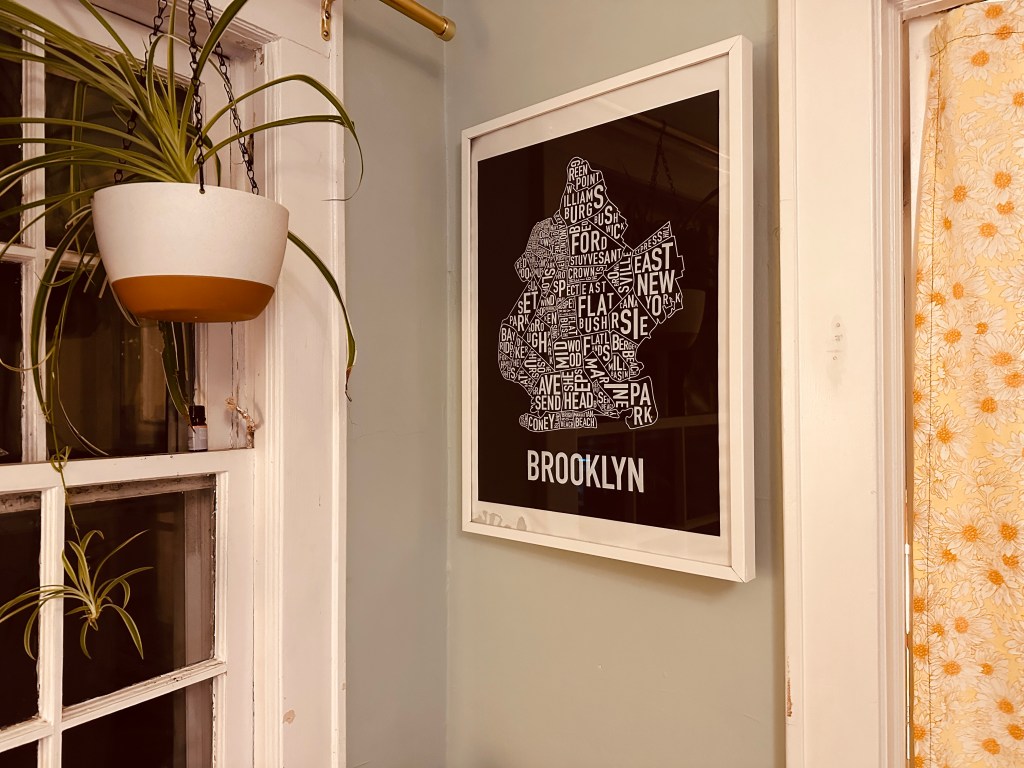


 object of memory