I originally began this site to encourage myself to sit and write. Over time I’ve realized that while I love formal writing, sometimes it hampers my ability to simply get words out.
Our current reality has sent me into complete overwhelm. Anger and sadness greets me every morning and I have spent the past few days knitting together feelings and preparing for productive action, or as much as one can do as an empathetic, compassionate person who believes human rights and social justice living in a state in North America.
Polished thoughts, yes. But shorter. Sometimes just images. A replacement for social media but still some form of connection. We’ll see what unfurls.
Clearly, I never followed up on the post I threw up here in July. Life has been a whirlwind, but for the first time in half a decade, I can honestly say things are okay—more than okay. I might be tempting fate by admitting it, but it’s true. Sid has settled into a new school in a small city nearby and commutes by train each day. Emmett started middle school and is thriving. And I began teaching at a new school that already feels like a tight-knit community. It’s been a learning curve, but one I expected—and welcomed.
This summer, I spent a lot of time working on personal things, the threads of which I’m still untangling, slowly. I’m realizing that ghosts, no matter how old, never truly vanish. They fade into the background but still tap you on the shoulder—or, sometimes, knock you down—despite their wispy, amorphous state. Memories are like time itself: fluid yet concrete, always there, moving with you—or through you.
Some people traveled to warm tropical destinations this spring break, while others may have opted for skiing or international trips. We didn’t. I wouldn’t even call it a staycation, as we didn’t do much unless you count my reluctantly taking Emmett to the 9/11 Museum upon his request, which was as far removed from typical vacation material as a New Yorker who experienced it firsthand can get, but whatever.
I tried hard to balance my feelings this week as we look towards a horizon filled with light, something that hasn’t been possible for years – Sid is coming home in May. He will return almost eleven months to the day since he left. That’s wild when you think about it. Essentially, it’s been an entire year. I’ve been clinging to this aspect of the future, this reality that doesn’t quite feel real yet, but it’s getting there, and the realness is infused with fierce maternal joy, excitement, and a lot of anxiety that comes with years of heartache. All of it is natural, and the core of it is that my baby is coming home.
Ellie weeps. Something in her weekly journal entry has made her sad, but she cannot find the words to explain why. “My scooter wasn’t going in the direction I wanted it to,” she had said earlier as the class talked about their weekends, but I wonder if there is something deeper in the statement.
She weeps intermittently through our morning project about the human body, though she pauses and joins the class in drawing the heart. As they work, I say to them softly, “Think about how your heart pumps. Think about how your heart nourishes your brain, your lungs. What shapes do you see? What movement?”
A child lobs a loaded question at the group: “What is more important, your heart or brain?” “That depends,” I say, smiling slyly. “It really depends.” Ellie glares at her peer and says matter-of-factly, “If you don’t have a heart, you die.” My own heart pumps quickly in reaction to her words.
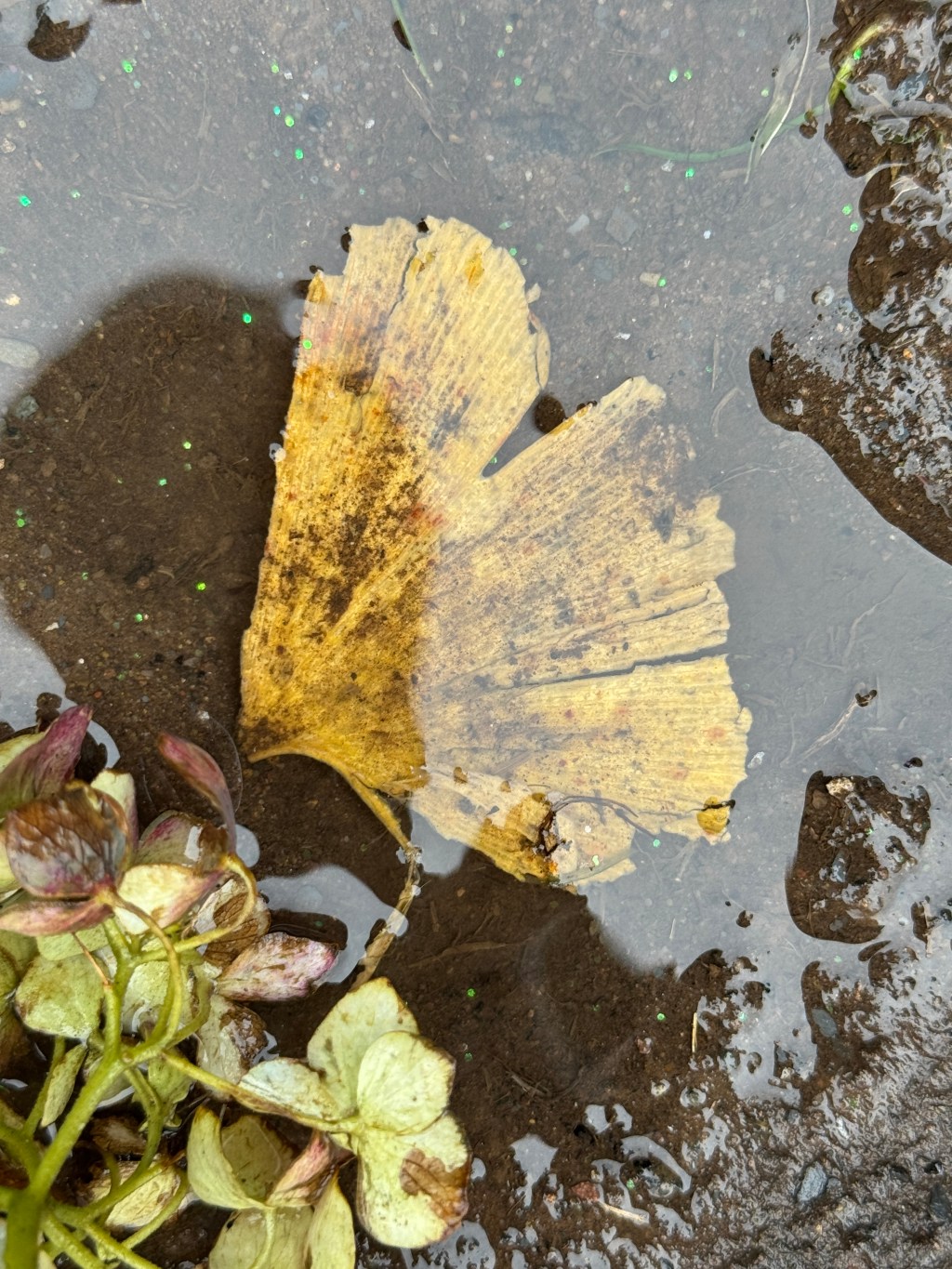
Ginkgo trees can live 1,000 years or more. They are living fossils. They’ve mingled with dinosaurs. They’ve survived some of the harshest conditions, including the atomic bomb and, most notably, New York City streets. They are strong. Survivors. And they start as tiny seedlings.
I found one this summer. I was petting a stray cat in Prospect Heights and saw one making its way up and out of very dry soil in a sidewalk crack. The cat was disinterested, but the baby ginkgo couldn’t say no, so I scooped it up in my hands and carried it with me to dinner with a friend in Park Slope. It was a beautiful night, and the waitress placed three glasses on our outdoor table. “Here’s one for your baby tree,” she said nonchalantly, and I plunked the parched roots into the ice water, drank some nice wine, and had a great evening.
No one in Penn Station bats an eyelash at a sweaty middle-aged lady clutching a ginkgo seedling wrapped in a damp paper towel at 10 pm while waiting for New Jersey Transit. My husband didn’t, either, as he’s known me for twenty years, and it is not unusual for me to return home from an outing with some living thing in tow, and I am sure he was relieved that it was a tree and not a cat.
Ginkgo saplings grow slowly. They are the antithesis of bamboo, which you can witness – even hear – growing if you are still and patient enough. Ginkgoes are giants that take their time. They are saving their energy for survival. I think that is why I’ve always loved them.
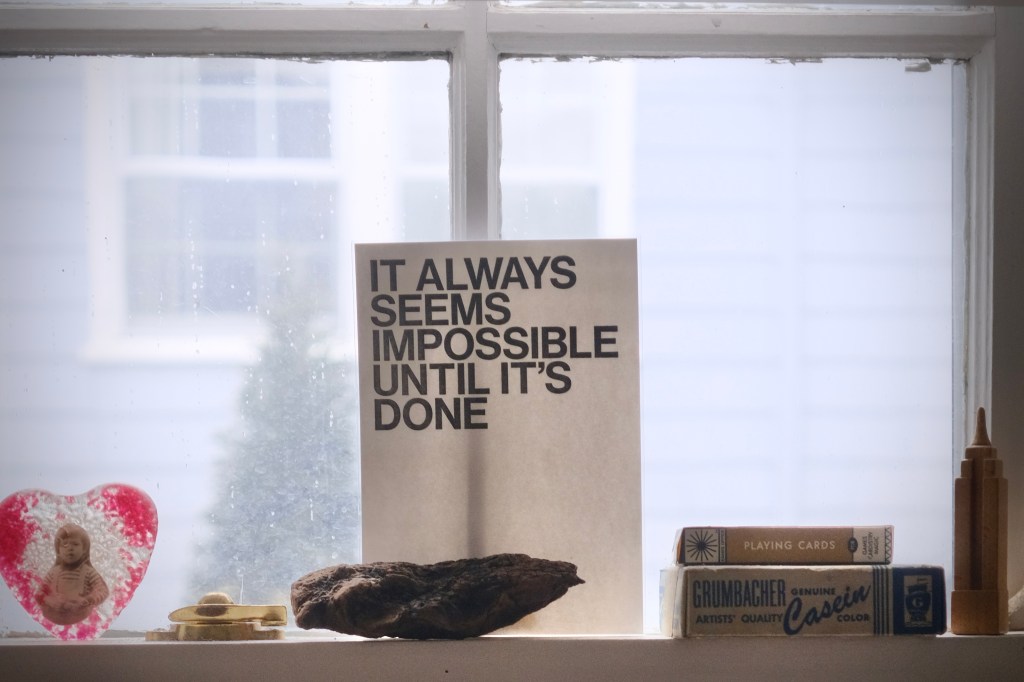
I tend to pick things up from the ground to save when I want to remember moments. I have stones that hold all sorts of memories – saying goodbye to my best friend when she left for college, hag stones from a beach walk in San Francisco days before Sid was admitted to the hospital. I have water chestnuts Emmett slipped into my hand while visiting Valentino Pier and horse chestnuts I’ve pocketed on walks through my town alone, savoring the fall air and leaves.
A few months ago, on a walk with our dog, I scooped up a few burr oak acorns. It was a pretty unhappy time, and the act of picking up the seeds was partially one of desperation. Maybe, I thought, I can make these grow. Maybe, I wondered, if they sprout, I will make it through. When I got home, I wrapped them in a damp towel, shoved them into a plastic bag, and left it on my office windowsill. Then I forgot they were there until December.
When I opened the bag, I anticipated mold and foul smells, but instead, it was an earthy musk of life. Pushing out of three of the four nuts were strong, thick roots. I held them in my hand, marveling at nature’s ability to do its thing in the dark of a wadded-up wet paper towel, then placed each in water and watched them grow. Unlike ginkgoes, oak trees are speedy. Within a week, two seeds had leaves. I moved one to an old bourbon bottle last weekend as its roots had become too complicated to reside in a salsa jar.
I probably should plant the oak and the ginkgo outside in the spring or fall, but I’m selfish and want to keep them close. When I watch their roots and leaves spread, their stems move incrementally toward sturdy trunks; it reminds me of how instinctual survival is. I want to grow with them. I want to survive with them.


 object of memory