The New York Times recently published an article about the Folly Tree Arboretum. It was in the Styles section, which I found quite odd, but I guess Folly Tree is on the Eastern Fork of Long Island, so it qualifies as stylish. Regardless, the arboretum combines three giant pieces of my heart – narrative, memory, and nature. You can read about it here.
My brain always trends toward the vernacular. History is awesome, and momentous events deserve mention, but my passion sits in the magic of everyday memories – the experiences that you or I have individually or collectively, interactions and exchanges that someone else might find mundane or irrelevant, but when looked at within the context of the personal or collective landscape, have meaning.
I studied the history of New York City architecture in grad school. While I deeply appreciated historic preservation, I consistently found myself drawn to the stories within the walls. Who lived there? What was their life and community like? What were their narratives? More often than not, I was interested in vernacular architecture – buildings that might otherwise be overlooked by preservationists (though this has changed somewhat) but held sociocultural meaning when looked at against the landscape of time.
It’s been a long, long time since I’ve had the quiet space to navel gaze, and recently, I’ve dipped my toe back into the activity in an attempt to remember and revivify who I was five years ago, before the pandemic, before all of this family upheaval. As I explained to a friend recently, I’m not entirely sure what makes me happy anymore. Reading about Folly Tree reminded me of those tiny sparks within. Narrative keeps my soul afloat, and if you peek into my home, you will find myriad objects that I have kept – my objects of memory – that tell the stories of my life.
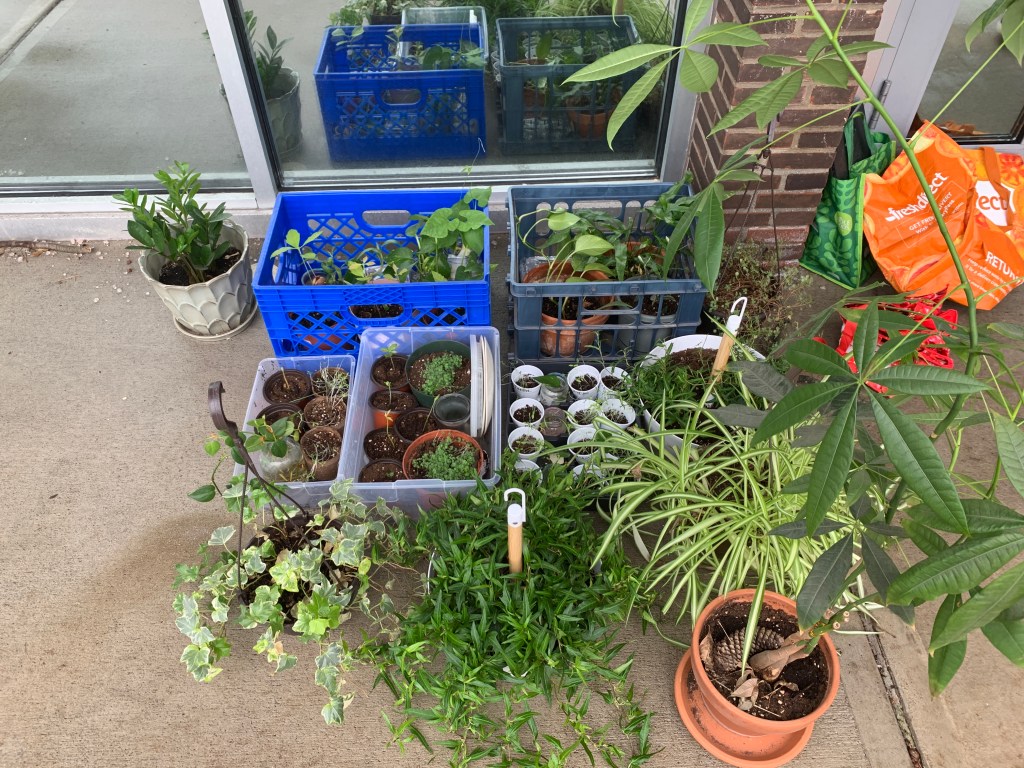
Oak trees produce acorns in cycles. There was a bumper crop in the fall of 2019, and in early 2020, they emerged from their wintering. One of my favorite things to do with preschoolers is plant seeds, and when I noticed several acorns near my house beginning to germinate in decomposing leaves, I brought them to my 3s classroom. Each child planted an acorn and then asked for more. We spent a good chunk of January and February exploring seeds from their foods at home – apple, lemon, avocado, etc. In early March, one child brought in dragon fruit seeds, and we curiously planted the tiny specs in peat pots and put them in the window.
In mid-March, the world shut down. On Friday the 13th, I packed the kids’ plants into my car and took them home from school. We were told “two weeks,” but I knew it would be longer, so I arrived home with a greenhouse of seedlings and placed them all over the kitchen. We all know where this story goes. We didn’t go back. I taught through the entire pandemic, albeit outside; most kids in our town didn’t set foot into a normal classroom for a year and a half.
I now know that my reaction to the pandemic was outsized – it fused together a bunch of baggage that has taken several years for me to identify and begin to disentangle – but my initial urge, or perhaps agony, was that I wanted to keep every child safe. I couldn’t do that, nor was it my job to do so, so when I wasn’t riding my bike to kids’ houses and trying to keep them company on their sidewalks, I was taking care of oak and dragon fruit sprouts. And they grew. They grew and grew and grew.
Not all of them survived. When we returned to school somewhat normally but “with an abundance of caution” in 2021-22, one oak tree and two dragon fruit plants remained. I taught kindergarten that year, and one of the students from my pandemic 3s class attended. When I saw her, now almost six years old, my heart burst into a million pieces, as her oak tree was the one that had survived.
I carried the sapling back to my school with a shovel and trowel that fall. During one of our outdoor play periods, that child and I dug a deep hole in the wooded area where the kids ran about, and we planted her tree. It looked like all other trees around it – a spindly baby oak, its leaves dropping – and no one would have known its importance. But I did. It was the acorn that survived. It was grief and helplessness and passion and hope. It was a moment passed and a living memory. And a future that continues to grow.
The beautiful thing about memory is that it’s always vernacular. What one holds as precious, another may never fully understand. But our memories can be like forests. We all have our oak trees – the tiny acorns that woke in their beds of decomposing leaves, growing within our experience’s conditions and standing tall together. Our stories are all different but they make up the collective, and in that, there is so much power.
[Note: The dragon fruit plants still live in my kitchen!]
 object of memory