object of memory

we must return to where it was lost / if we want to find it again

Tag: fixing my brain

  • i run to keep things whole

    i run to keep things whole


    Once upon a time, I stood at the full-wall kitchen window in my West Village office building and watched two planes crash into towers a mile downtown. I watched debris fall and gradually realized that it was not all pieces of plane and glass. I watched those towers pancake to the ground, the vision painfully surreal to process.

    I walked the eighty blocks back to my apartment, tuned the radio to NPR, and slumped down onto the kitchen floor. An hour later, unable to sit with my grief, I threw on my sneakers and ran. Uptown and downtown, I would have looped the bridges had they not been closed. I couldn’t stop running; I needed to feel my heart beat. And with every beat, I wondered how many other hearts had stopped.

    (more…)
  • what to do with a busy brain

    what to do with a busy brain

    Raise your hand if you have a brain that is busier than your body. Hello, friend!

    I recently had a psychiatrist appointment during which I expressed distress over my level of anxiety. I know I am anxious when I stop sleeping at night—a frustrating no-win situation where I don’t want to go to bed because I know sleep won’t come. However, I’m also nearly paralyzed by the idea that I won’t sleep and will be too tired in the morning.

    Cue the tiny violins, but honestly, when you work with four and five-year-olds all day, you need to be awake. They know when you are bluffing. Plus, you are used as a human tissue for eight hours a day, five days a week, and if that immune system is depressed, well, you wind up with RSV like an adult four-year-old. Hello. That’s been me for the last three weeks.

    (more…)
  • sing a song of seedlings found

    Ginkgo trees can live 1,000 years or more. They are living fossils. They’ve mingled with dinosaurs. They’ve survived some of the harshest conditions, including the atomic bomb and, most notably, New York City streets. They are strong. Survivors. And they start as tiny seedlings.

    I found one this summer. I was petting a stray cat in Prospect Heights and saw one making its way up and out of very dry soil in a sidewalk crack. The cat was disinterested, but the baby ginkgo couldn’t say no, so I scooped it up in my hands and carried it with me to dinner with a friend in Park Slope. It was a beautiful night, and the waitress placed three glasses on our outdoor table. “Here’s one for your baby tree,” she said nonchalantly, and I plunked the parched roots into the ice water, drank some nice wine, and had a great evening.

    No one in Penn Station bats an eyelash at a sweaty middle-aged lady clutching a ginkgo seedling wrapped in a damp paper towel at 10 pm while waiting for New Jersey Transit. My husband didn’t, either, as he’s known me for twenty years, and it is not unusual for me to return home from an outing with some living thing in tow, and I am sure he was relieved that it was a tree and not a cat.

    Ginkgo saplings grow slowly. They are the antithesis of bamboo, which you can witness – even hear – growing if you are still and patient enough. Ginkgoes are giants that take their time. They are saving their energy for survival. I think that is why I’ve always loved them.

    I tend to pick things up from the ground to save when I want to remember moments. I have stones that hold all sorts of memories – saying goodbye to my best friend when she left for college, hag stones from a beach walk in San Francisco days before Sid was admitted to the hospital. I have water chestnuts Emmett slipped into my hand while visiting Valentino Pier and horse chestnuts I’ve pocketed on walks through my town alone, savoring the fall air and leaves.

    A few months ago, on a walk with our dog, I scooped up a few burr oak acorns. It was a pretty unhappy time, and the act of picking up the seeds was partially one of desperation. Maybe, I thought, I can make these grow. Maybe, I wondered, if they sprout, I will make it through. When I got home, I wrapped them in a damp towel, shoved them into a plastic bag, and left it on my office windowsill. Then I forgot they were there until December.

    burr oak & helen frankenthaller

    When I opened the bag, I anticipated mold and foul smells, but instead, it was an earthy musk of life. Pushing out of three of the four nuts were strong, thick roots. I held them in my hand, marveling at nature’s ability to do its thing in the dark of a wadded-up wet paper towel, then placed each in water and watched them grow. Unlike ginkgoes, oak trees are speedy. Within a week, two seeds had leaves. I moved one to an old bourbon bottle last weekend as its roots had become too complicated to reside in a salsa jar.

    I probably should plant the oak and the ginkgo outside in the spring or fall, but I’m selfish and want to keep them close. When I watch their roots and leaves spread, their stems move incrementally toward sturdy trunks; it reminds me of how instinctual survival is. I want to grow with them. I want to survive with them.

  • i feel numb, burn with a weak heart

    i feel numb, burn with a weak heart

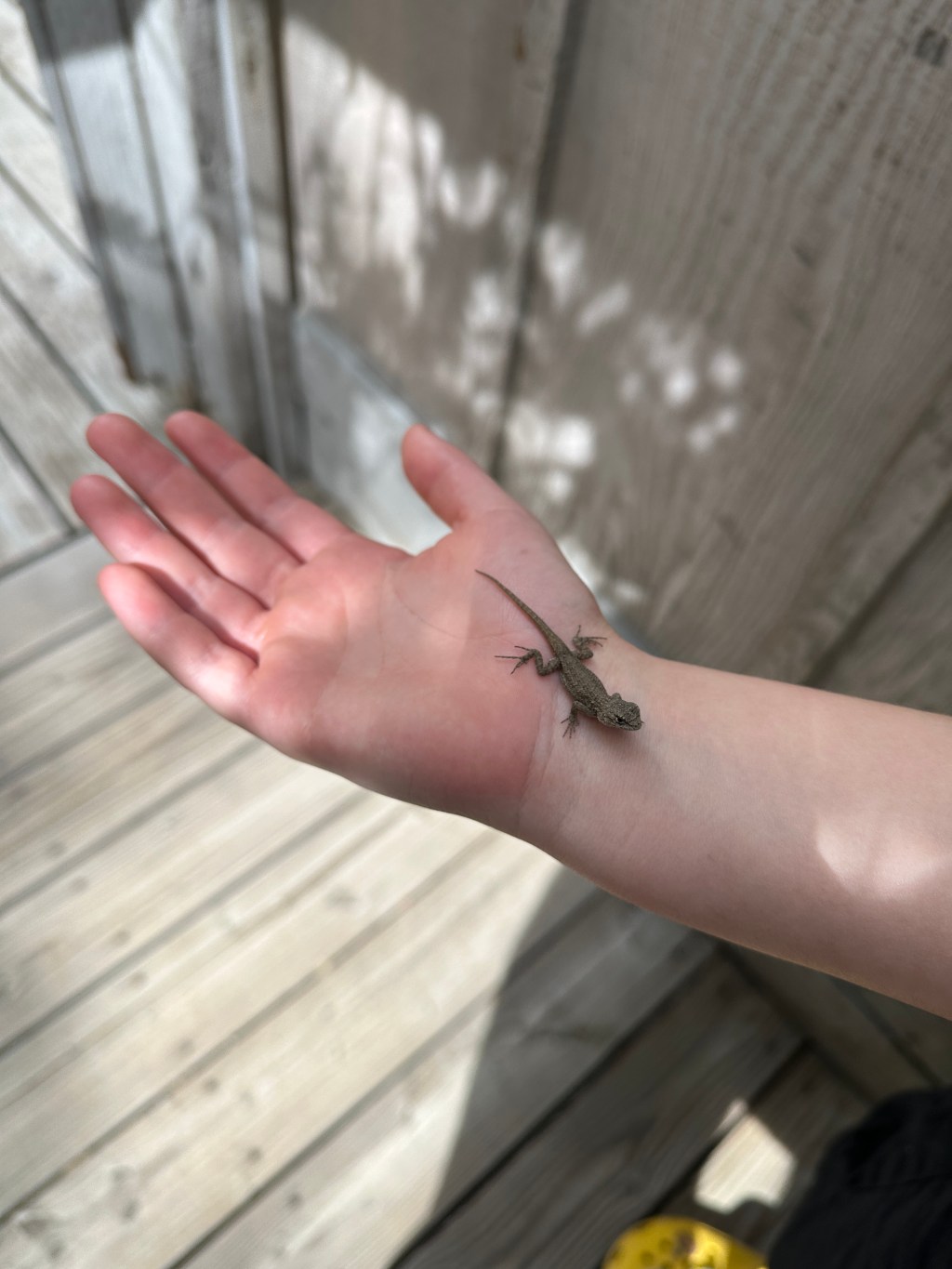
    My family has a Labor Day tradition – a trip to the shore without me, because to be blunt, while I love beaches, I am not a fan of sitting on them in the blaring sun. I am more of a rocky, cold, rough water, and sparsely populated beach person, which is the exact opposite of the Jersey Shore. Tradition dictates that I remain in our home with the dog, three cats, and a very antisocial and possibly blind lizard. I don cruddy clothing and pajamas and chip away at the layers of our house that come from living with three humans who cannot part with anything. In short, they leave, and I donate things and throw a lot away. It is my favorite weekend of the year.

    This is why I am sitting in the dark at my kitchen table, the moon’s glow filtering through the skylight, apologizing to a parent whom I just spammed with things to think about for the school year, not realizing it is past midnight. I have five browser windows, three documents, and four email accounts open on my screen. I am bouncing between discussions with schools, lawyers, clinicians, my own teaching/caseload, a course presentation that is due soon, a creative writing piece that I can’t seem to push out words for, and a pleasure project that I am slowly hedging through that involves rewriting Sol LeWitt’s sentences on conceptual art for preschool (because OMG, it works. It. Works.). I’ve only been able to sit still to work on the above because of the satisfaction gained from organizing the garage and both kids’ rooms and 85% fixing the rusted ball joint on our basement bathroom sink stopper.

    That was a very long way of explaining how one person in this giant world regulates herself during a period of deep sadness. I write this not because all is doom and gloom because it’s not, but because sometimes we need to acknowledge the strange mass of Vantablack in the room. In my case, that’s grief.

    I tackled one of the messier spaces in our house a few hours ago – a small sunroom that holds an exercise bike, a few weights, and our PC and printer. It was filled with piles of crap – both kids’ unemptied backpacks from last year, random pieces of paper, baseball and Pokémon cards, Sid’s art supplies, and all of the phone chargers I have been looking for over the last twelve months. I emptied Emmett’s pack first, then scooped the playing cards into a box to be sorted. I pulled out unused supplies that could be used this year and paused for a second to sigh and lament that my baby is now in his last year of elementary school. Then, it was time to go through Sid’s things.

    Sid has been away for seven weeks, and we are preparing for his next step, which likely will not be at home with us. I cannot express how difficult this has been for the entire family, and each time we get over one hump, another higher hill of emotion awaits. I am incredibly proud of my child and of all four of us. Healing – understanding and learning from how each of us communicates, tackling and sitting with excruciating feelings, navigating the should have / could have / wish we had threads of guilt – is really fucking hard work.

    I had spent the morning on calls and email back and forths about my child’s future, and then took my seething anger at the American school and mental health systems and channeled it into cleaning out the refrigerator. When I finally went through Sid’s backpack, I was blasting music on the turntable because I needed to feel it reverberate through my everything. Plus, it can’t hurt to dance a little.

    So, I was dancing on the gross carpet after chucking half-completed homework assignments and old candy wrappers into the garbage when I realized I was hugging Sid’s backpack. I had pulled the canvas close to my chest, my fingers rubbing the material, and the lyrics Home is where I want to be / Pick me up and turn me round /I feel numb, burn with a weak heart / I guess I must be having fun ran through my brain like razors of emotion. I curled around the backpack, kneeling on the half-cleaned floor, and sobbed. I cried hard and then hung his things in the hall closet and stood in the clean, empty living room and listened to the needle tracking on the record’s dead wax, the crackle of no sound, and thought to myself, did I just hurt so hard that I feel nothing, or did I open wide until the emotions completely filled me?

    I’ve been thinking a lot about that irony of emptiness. A room can appear so full but actually be vacant; conversely, an empty space can be so full of memory. In these days of intensity, these moments that trigger the need to cleanse and organize and reorganize and seek sense and order, the fullness feels so empty, and the emptiness so full.
  • and never trust a heart that is so bent it can’t break.

    and never trust a heart that is so bent it can’t break.

    It’s been a while. I’ve had a lot to say but not a lot of words, if that makes any sense. Summer began and passed and here we are almost at the cusp of school starting. I’m not sure if I have much to show for it other than work hours logged, a few good books read, and some intensive therapy – and I’m transparent about that one because these things need to be more at the forefront of conversation. Humans can be fragile and strong at the same time. I used to think that it was a balance but these days I feel that it is a composite, for there is strength in fragility and, conversely, strength can be fragile.

    I am sitting with a beer at SEA-TAC, waiting for my red eye flight home. Four hours ago I was in California hugging Sid for the first time in almost two months and then navigating a flimsy rental car through a canyon of giant flood puddles and mudslides and rocks and pretending that I could see the road on the 405. Apparently there was an earthquake in Ojai around the time that my first flight took off. Seattle is sunny and warm and full of forest fire smoke. I don’t think it’s dramatic to say that the world is upside down.

    This has been the summer of hard feelings – encountering them, acknowledging them, facing them, feeling them. I’ve never been good at any of that. I have always felt things deeply but received a D- in the processing department. If anything, I will complete this summer with a degree in feelings. Take that, Harvard.

    I’m not even sure what highway I was on this morning – maybe 14 – en route to the 405, hustling to try and get ahead of the flooding and feeling guilty for not spending the full allotted four hours with my kiddo, but also cognizant of the fact that if I missed my flight, I wouldn’t be home until at least Tuesday. I’d spent the night in a random hotel, blackout drapes drawn, diving into and surfacing from intense dreams that left me covered in sweat, shaking so hard that I thought I would be sick. The rain barreled down onto the road, so much so that the car sensor registered that I had crashed the front. It kept dinging and flashing for a good half hour, the camera obstructed by sheets of water. Every so often, the car would lift with a surge, and I’d grasp the steering wheel tighter, training every thought on the lyrics of Bright Eyes songs that I’d set up to play, album by album, from my phone.

    The rain reminded me of a trip my husband and I took to Turkey shortly after we were married. We drove from Izmir to Cappadocia, stopping in various towns and cities along the way, and at one point we were driving up a mountain behind an oil truck that was moving exceedingly slow. When it finally let us pass, our car was pelted with hail, and we realized quickly that the slowness and largess of the truck had been shielding us from the harsh reality of our future. When this memory hit, tears ran freely down my cheeks. I wasn’t making a sound, but the physicality of the emotions surfaced.

    Much of this summer has been acknowledging the fact that I have been using life like that oil tanker, the feelings like hail just out of view. At some point that truck is going to pull over and the natural elements will reach you. So, here I am with a lot of dents and scratches. I think the hail has gotten smaller, though sometimes the smallest balls of ice sting the most.

    In other news, Sid has been connecting with farm animals, and one of the chickens is named Patricia.