object of memory

we must return to where it was lost / if we want to find it again

  • all things grow, all things grow

    all things grow, all things grow

    The New York Times recently published an article about the Folly Tree Arboretum. It was in the Styles section, which I found quite odd, but I guess Folly Tree is on the Eastern Fork of Long Island, so it qualifies as stylish. Regardless, the arboretum combines three giant pieces of my heart – narrative, memory, and nature. You can read about it here.

    My brain always trends toward the vernacular. History is awesome, and momentous events deserve mention, but my passion sits in the magic of everyday memories – the experiences that you or I have individually or collectively, interactions and exchanges that someone else might find mundane or irrelevant, but when looked at within the context of the personal or collective landscape, have meaning.

    I studied the history of New York City architecture in grad school. While I deeply appreciated historic preservation, I consistently found myself drawn to the stories within the walls. Who lived there? What was their life and community like? What were their narratives? More often than not, I was interested in vernacular architecture – buildings that might otherwise be overlooked by preservationists (though this has changed somewhat) but held sociocultural meaning when looked at against the landscape of time.

    It’s been a long, long time since I’ve had the quiet space to navel gaze, and recently, I’ve dipped my toe back into the activity in an attempt to remember and revivify who I was five years ago, before the pandemic, before all of this family upheaval. As I explained to a friend recently, I’m not entirely sure what makes me happy anymore. Reading about Folly Tree reminded me of those tiny sparks within. Narrative keeps my soul afloat, and if you peek into my home, you will find myriad objects that I have kept – my objects of memory – that tell the stories of my life.

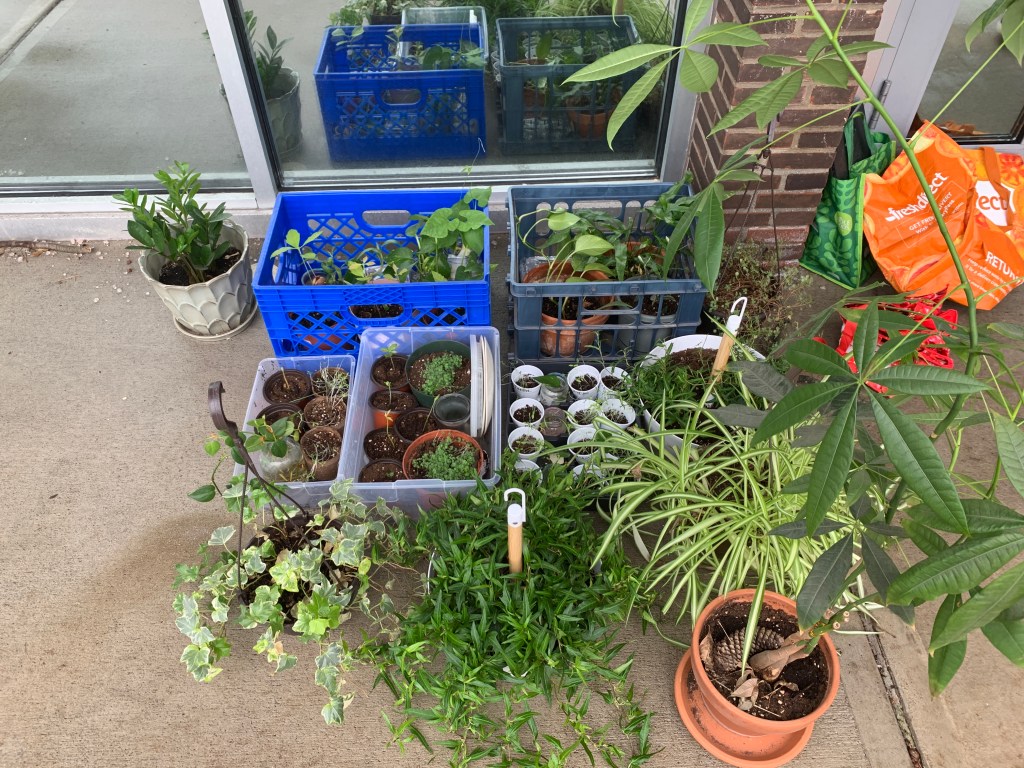
    Oak trees produce acorns in cycles. There was a bumper crop in the fall of 2019, and in early 2020, they emerged from their wintering. One of my favorite things to do with preschoolers is plant seeds, and when I noticed several acorns near my house beginning to germinate in decomposing leaves, I brought them to my 3s classroom. Each child planted an acorn and then asked for more. We spent a good chunk of January and February exploring seeds from their foods at home – apple, lemon, avocado, etc. In early March, one child brought in dragon fruit seeds, and we curiously planted the tiny specs in peat pots and put them in the window.

    In mid-March, the world shut down. On Friday the 13th, I packed the kids’ plants into my car and took them home from school. We were told “two weeks,” but I knew it would be longer, so I arrived home with a greenhouse of seedlings and placed them all over the kitchen. We all know where this story goes. We didn’t go back. I taught through the entire pandemic, albeit outside; most kids in our town didn’t set foot into a normal classroom for a year and a half.

    I now know that my reaction to the pandemic was outsized – it fused together a bunch of baggage that has taken several years for me to identify and begin to disentangle – but my initial urge, or perhaps agony, was that I wanted to keep every child safe. I couldn’t do that, nor was it my job to do so, so when I wasn’t riding my bike to kids’ houses and trying to keep them company on their sidewalks, I was taking care of oak and dragon fruit sprouts. And they grew. They grew and grew and grew.

    Not all of them survived. When we returned to school somewhat normally but “with an abundance of caution” in 2021-22, one oak tree and two dragon fruit plants remained. I taught kindergarten that year, and one of the students from my pandemic 3s class attended. When I saw her, now almost six years old, my heart burst into a million pieces, as her oak tree was the one that had survived.

    I carried the sapling back to my school with a shovel and trowel that fall. During one of our outdoor play periods, that child and I dug a deep hole in the wooded area where the kids ran about, and we planted her tree. It looked like all other trees around it – a spindly baby oak, its leaves dropping – and no one would have known its importance. But I did. It was the acorn that survived. It was grief and helplessness and passion and hope. It was a moment passed and a living memory. And a future that continues to grow.

    The beautiful thing about memory is that it’s always vernacular. What one holds as precious, another may never fully understand. But our memories can be like forests. We all have our oak trees – the tiny acorns that woke in their beds of decomposing leaves, growing within our experience’s conditions and standing tall together. Our stories are all different but they make up the collective, and in that, there is so much power.

    [Note: The dragon fruit plants still live in my kitchen!]

    Leave a comment


  • whisker project

    whisker project

    I organize when I’m anxious. Clutter and piles make it hard for me to think, and when I hit that emotional overload, the only thing that seems to ease the tension is a top-to-bottom reorganization of a space. Usually, this is my office, as while I am not a fan of clutter, I create clutter. I may have cleaned and reorganized three rooms of our house for ten hours yesterday, but I also just left my lunch mess on the kitchen counter to deal with later. So, I’m inconsistent, as most humans are, I guess.

    The attic was my first victim this weekend. It’s a strange, semi-livable space that Sid once used as his bedroom and is now my husband’s office. Previous owners blew out the dormers and finished it with flooring, insulation, and electrical, but no heat. And when I say, “blew out the dormers,” I mean they created one sliver of space where an adult over 5’ 2” can stand upright, but the rest of the ceiling slants at such an angle that you will inevitably crack your head if you stand up too fast or walk without thinking. My skull has made contact with the attic ceiling more times than I can remember, and perhaps I can’t remember because I’ve hit my head so many times.

    My husband’s office is only part of the attic space. The rest has been full of boxes and dumped belongings. Stuff from my classroom that I’m not sure what to do with. Many, many items from Sid’s tiny bedroom that I’ve ferried out when helping him clean. I threw away a lot, donated much more, and boxed and housed what was left. Then I carried the pieces of Emmet’s old IKEA bed up the not-up-to-code and insanely tight spiral staircase and reassembled it in the only area that could accommodate the height.

    While rifling through the crap that I’d left there (likely from when I was decluttering my office, go figure), I uncovered two boxes of letters. I love letters. I never get them anymore because it seems as though no one thinks about them these days. They’re on my mind because I write Sid a card daily. While I hate that I have to write to him, I also relish the nostalgia of making my handwriting legible and the freedom to print photos, doodle, and pretend that the internet doesn’t exist.

    But back to the boxes of letters. One box was filled with notes from my husband – many from before we were married, then all of the cards he has given me since. I have the first flower he ever sent to my office and the initial email that I received from him – a cold intro – that convinced me to take a very unlike-me leap of faith and meet him in person. I also found a box of letters from around the world and a good chunk from Brooklyn that contained…wait for it…cat whiskers.

    My present-day friends may want to reconsider their decision to associate with me, and I get that. But I’ll give you all a little context first, just in case you are still paying attention.

    I love cats. I love their whiskers. They’re weird and kind of pretty if you look at them closely. Finding one is like finding a feather or a penny. I almost always know which cat it came from in our house. At some point in my 20s, I just started saving them. I must not have vacuumed much back then. And at some point during that same period, I had an idea: if I asked the internet to send me their found (not plucked) cat whiskers, would they do it? The answer, my friends, is yes. The internet delivered.

    I love very few things about technology, but this project was one of them. I received cards with cat whiskers, photos of cats, names of cats, etc., from Portugal, Argentina, London, Spain, and all over the United States. Family sent them. Friends. But mostly strangers. It was weird and wonderful. I had grand dreams of creating an online exhibit but ran out of time and energy. I did, however, save the letters. If you sent me one, I still have it.

    What’s the point of me revealing this potentially embarrassing but fully embraced in a let-your-weird-hang-out kind of way information? Most of my writing up until this point has been sad. It’s me reminding myself, and maybe you, if you are also going through it, that things will eventually not feel quite as dark. I feel that daily. But little by little I remember the things that have made me happy. I include cats and whiskers on that list, but mostly it was the strange but wonderful interactions I had via snail mail with strangers about cats. Collectively, we used the internet to not be on the internet, which I think is a lost art.

    Don’t worry – I’m not asking you for a cat whisker. Unless you want to send one, in which case, I might consider it. I’m just reminding you that we are all human. So many of my connections over the last two years have been around pain, and I’ve needed that, but it’s awfully nice to be reminded that, sometimes, we find commonalities and friendships in the oddest of places.


  • stepping off the gravitron

    stepping off the gravitron

    Things I have learned in the last two weeks in no particular order:

    1. The house is exponentially quieter with one child vs. two.

    2. The house is still just as messy.

    3. Once there is quiet, you realize there are so many layers to peel back, wade through, or hide beneath.

    4. After several years of being on edge, the brain doesn’t know what to do with itself.

    5. The body retaliates after several years of being on edge.

    6. Sleep is a fickle creature that evades at night and then attacks during the day.

    7. Music is solace. The more I listen, the more I hunger for a thrumming beat, rhythm that pushes my body into movement, for sounds that vibrate through my entirety.

    8. Perhaps I am starved for the feeling of wholeness and am attempting to fill it with sound.

    9. Or maybe the sound reminds me that I am alive.

    10. My lynx point Siamese rescue kitten will eat half a loaf of challah if we leave it on the counter.

    11. My orange cat curls around my head each night and purrs like he is gifting me a lullaby.

    12. My tuxedo cat has started sleeping in my oldest child’s vacant room.

    13. I am tired of using oldest and youngest to name my children, so I’ve created pseudonyms: oldest = Sid, youngest = Emmet

    14. I talked to Sid on Zoom today – it was the first time in fourteen days that I could see his face – and the distance felt so stark, immovable, and overwhelming.

    15. Ravens are living in the trees near my house.

    16. Their screams are fabulous.

    17. Mid-summer magic hour, when the lightning bugs begin to rise, will always be magical.

    18. One day, millisecond by second by minute by hour, I will stop feeling like I have just stepped off a Gravitron.

    19. One day the pieces will fall back into place. Likely not the same place, but adjacent, with edges that line up just enough but not quite, which is good enough for me.

    Leave a comment


  • in the thicket

    in the thicket

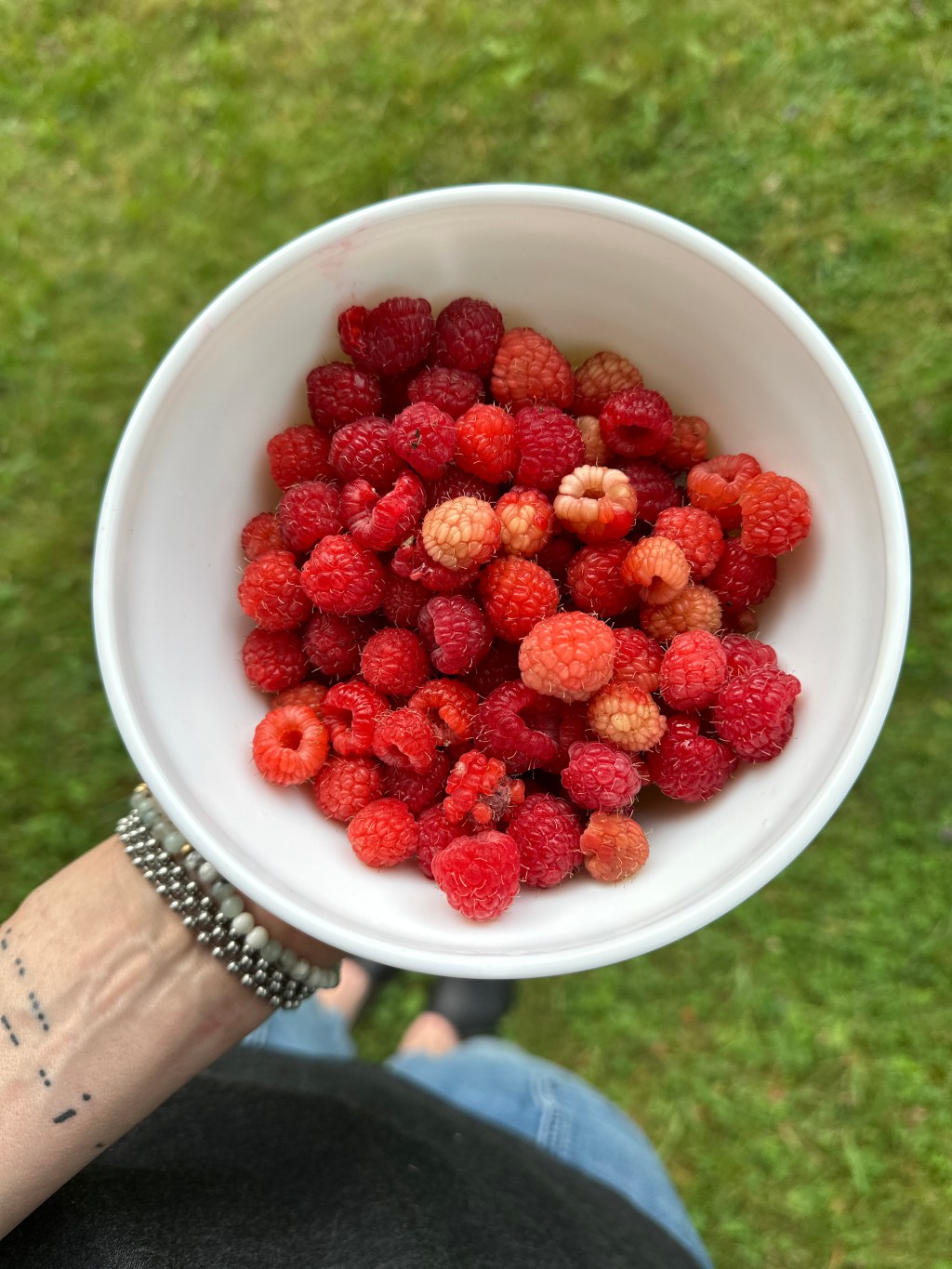
    I grew up with a giant patch of wild raspberries. I would duck beneath a bow of leaves and thorns, and my backyard would disappear. Instantly I was transported into a forest of rubies. They hung heavy from the branches, and the brambles were so dense that birds could not penetrate the understory. I remember many mornings sitting on the ground, filling my mouth with the tart and sweet magic, getting mauled by mosquitoes but not caring, as the berries were just once a summer and sometimes in early fall, and their taste was unrivaled.

    I left the house this afternoon for the first time in several days. Life has been like that lately – I turn around and am unsure of where I am in time. I’ve been hiding a bit, hesitant, and aware that my head feels thick and slow and that it’s been a challenge to keep up with conversations. We have been in survival mode for over a year. Now that some of the restraints have been lifted, it’s been hard to know what to do, think, and how to feel.

    A raspberry patch is in a school garden across the street from my house. I began caring for it during the pandemic. It was overgrown with trees and weeds, and I spent hours working the soil and protecting seedlings from hungry birds and squirrels. Someone had planted raspberry canes. I trimmed them dutifully for three years, confining them to one raised bed.

    I couldn’t bring myself to grow or care for anything this year. Spring came and went, and I did not turn the soil in my backyard for peas and tomatoes. I didn’t touch the school garden. I couldn’t deal with the idea of having to help something survive, probably because every fiber of my being was dedicated to ensuring that my oldest child remained on this earth. My survival, in so many ways, depended on his.

    My oldest loved raspberries since the moment he began eating solid foods. He is the first one by my side when we gather blackberries in Vermont or strawberries at a local farm. The past few summers, I’ve gone out early to pick the school raspberries, then left a bowl for him on the kitchen counter. Even at eleven and twelve years old, he’d put the berries on his fingertips to eat them, and each time he went through the process, my heart would melt. Every so often, I’d have a dream where he and I were crouched beneath the brambles collecting the red fruits in our cupped hands, his blond curls glinting in the filtered sunlight. I am used to him by my side each summer, picking those berries. But this summer, he’s not.

    This afternoon I slipped on my clogs and shuffled over to the raspberry patch with a bowl in my hands. I started at the base of the thicket, picking, moving up to the top methodically. I stepped into the thorns, searching for the fruits hidden beneath. There’s an art to picking berries. You look at the color first, then gently wrap your fingers around the fruit. If it slides off the branch without effort, it’s ready. Any tugging and it’s not ripe enough.

    As I picked, I thought about my son. I thought about how difficult it is as a parent to reconcile the concept that you cannot fix everything, that sometimes, despite all your efforts and love, you are not enough – and that not being enough is okay, even though it hurts like a million daggers tearing apart your heart. I thought about how much I miss him even though it’s only been three days. I heard his voice as a baby and his sounds as a teenager. I smelled his hair. I felt his warm hand in mine.

    I put a perfect red raspberry in my mouth and let it melt. I felt the taste hit my senses, the tart at my cheeks, the sweetness beneath my tongue. My eyes teared as I imagined myself as a child beneath the brambles, then my son, our voices hushed, our fingers stained. I thought about how I’d encouraged him to visit the patch a week ago and that he’d declined, withdrawn and sad, ready to move on to whatever the future was, toward the uncertainty. I remembered how much my heart hurt when he said no to joining me, that sense of loss, not just for that moment but for all the struggles and heartaches of our recent past.

    There’s a bowl of raspberries on my kitchen counter. I’d like to say that they are waiting for my oldest son, but I know that they are not. He is in California, and I am in New Jersey. He is receiving the help that I could not provide. He is not eating these raspberries, but I am. One by one, I put them in my mouth and close my eyes. I feel the taste spread like the beauty of memory sprawling throughout my consciousness. I take in the flavor and all of the wonder that flows from it and think of my child, and know that, at some point, it will be okay.


  • lost in the middle of an island

    lost in the middle of an island

    Years ago, I lived way way east on the Upper East Side, east enough that it was a hike from the last stop on the crosstown bus, literally past the last avenue. It was a tiny tiny apartment – a sixth-floor walkup – and the stairs were spiral and outside and made of stone. I loved that apartment more than almost any other place I’d live in, mainly because, despite its minuscule square footage – I think it was 250 or 300 sq ft – it had three triple-tiered windows that went from ceiling to floor, and a tiny but useable balcony, which had once been for tuberculosis patients to “take the cure” but served as an excellent spot for looking out across Manhattan and the East River. Said apartment also had a kick-ass kitchen, which is pretty entertaining given that I rarely ate or cooked in it, but having counter and cabinet space seemed like an absolute luxury when I was twenty-one years old.

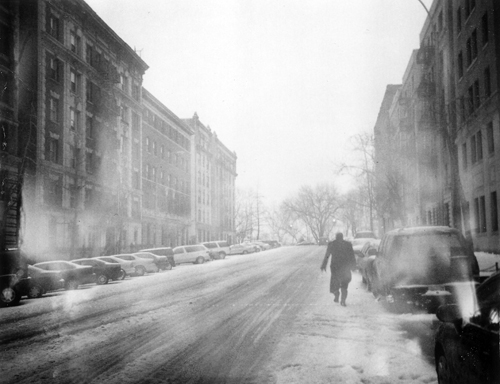
    Given its proximity to the river and the tall buildings that lined it, my street was often like a wind tunnel. I remember walking home from Lexington or the crosstown bus on frigid nights, the winter air cutting through my hat and scarf. When it snowed, which it often did in the years that I lived there, large drifts would pile up, and the swirls of white would consume the buildings like low clouds. I spent a lot of time watching the world through those giant windows.

    I remember waking one morning to a strange dimness, as though someone was cupping their hands over the sun and realized that it was snowing hard – storming – and nearly a foot already lined the streets. I love snow. I love how it mutes the world. I love the silence. I love the sense of solitude it can bring. Standing at my window that morning, I could barely decipher east from west. The streets were empty. I pulled on my running clothes and laced my sneakers tightly, then skip-slid down my six flights of outdoor stairs covered by windblown snow, flung open the gate to the building, and began to make my way west toward Central Park.

    Snow running is hard work, and by the time I reached the park, I was out of breath and sore, despite being a reasonably experienced runner, so I slowed to a trudge. I couldn’t see the roadway and paths, so I walked and listened to the sound of ice crystals falling thump thump into the pads of snow. The sun had emerged from the cloud layer, and its rays sifted through the tree branches, covered in white, like a winter understory, the snow standing in for the spring and summer leaves. I walked and wondered and listened to the sound of nothingness. There was no one else around and for a good hour, I felt like time had stopped.

    Then I got cold. Very cold. I pivoted and looked back at my tracks, now covered with a new layer of snow. I looked around and realized I had no idea where I was. I struggled to find a landmark, something familiar to give me a sense of where in the park I’d wandered to, but all I could see were trees. I panicked for a moment – these were the days before cell phones and watches with fancy GPS – and then took a deep breath and reminded myself that I was in a park in the middle of an island, and no matter what direction I walked in, I would inevitably hit one piece of the perimeter. I had run almost every inch of Central Park in daylight and darkness. It wasn’t possible to get lost, just sidetracked.

    Lifting my heavy, frozen feet, I began to run. The snow was well past 18”, so it was more like high-knee jogging, but as the blood started flowing back into my limbs, as I began to feel my fingertips and stopped obsessing over the fact that I’d had to pee for an hour and that I hadn’t brought money or subway fare, as I just fell into the ragged but still rhythmic breath that moved in and out of my lungs, as my arms pumped and heart pounded, and my eyes gained greater focus on the snowy landscape before me, I managed to find my exit. It was, of course, way north and on the other side of town, but I reached the semi-plowed street and visible sidewalks, and despite having to run an extra few miles back home, I got there eventually.

    I’ve been thinking about that morning lately – how beauty shifted so quickly to panic, how a journey through a place I knew with my eyes closed suddenly felt ominous, how lost I felt, how solitude morphed into alone, how hopelessness avalanched. Sometimes feeling lost in the known is more disorienting than being thrust into the unknown. It’s hard to remind yourself that you are also a park in the middle of an island. There are perimeters to every experience, even if they appear nonlinear. Even when storms blur things into gradients of white, there is depth beneath, there is underbrush, and there are clues to paths and exits and streets and subways and far-off rivers. Somewhere in there, the high-knee running shifts back to even strides and plowed sidewalks.

    Leave a comment